







Studio Bench for Agencies

Your extra
bandwidth.

Danny Hotea is the bench agencies call when the timeline is tight or the internal team needs a second creative brain. Production overflow, creative direction, or both — white-label, embedded in your process, invisible to your client.

Client Roster

In good company.

From Fortune 500 boardrooms to hometown storefronts, I hold every brand to the same standard.

  • ADP
  • Citi
  • Dell
  • General Motors
  • SiriusXM
  • Smithfield
  • Sony
  • USAA
  • Vrbo
  • Love ATX
  • Oregon Trailer
  • Plethuno
  • RCO
  • Silencer Shop

How I fit in

Four ways to tap the bench. Bring me in for one sprint or keep me on standby for whatever comes next.

01

Production Overflow

Extra design and dev hands when the internal team is buried. I work inside your file structure, your tools, and your naming conventions — not mine.

02

Creative Direction

A second point of view when bandwidth for concepting is thin. Positioning, art direction, and concept development, handed off in your deck format.

03

Specialist Gaps

Motion, web build, illustration, or whatever niche skill your bench doesn't cover this quarter — brought in for exactly as long as you need it.

04

White-Label Partnership

An ongoing bench relationship for agencies who need reliable overflow capacity month over month. Fully invisible to your client, every time.

Capabilities

What each service covers, and when it's the right call. Not seeing your need? Ask. The bench flexes.

Production Overflow

  • Brand-system layouts and templates
  • Pitch and presentation decks
  • Social, digital, and display asset sets
  • Packaging, print, and collateral production
  • Retouching and file prep
  • Landing pages and email builds

Good fit if

  • Your team is buried and the deadline won't move
  • You need work built in your files and your standards
Creative Direction

  • Brand positioning and messaging
  • Concept development
  • Art direction
  • Campaign ideas and storyboards
  • Pitch narrative and framing

Good fit if

  • You want a second point of view before the concept locks
  • Bandwidth for big thinking is thin this quarter

Specialist Gaps

  • Motion graphics and animation
  • Web design and build
  • Illustration
  • Identity and logo design
  • Video editing

Good fit if

  • Your bench doesn't cover a niche skill right now
  • You need it for exactly as long as the project runs

White-Label Partnership

  • Standing monthly bench capacity
  • Handoff in your templates and naming
  • Priority scheduling for your projects
  • Shared project channel
  • Invisible to your client, every time

Good fit if

  • You hit overflow month after month
  • You want one reliable partner instead of a rotating cast

Selected work

Four projects, each with the problem, the process, and the result. Yours could be next.

  • Cox Automotive: Cox Automotive: Product Design + UX Design
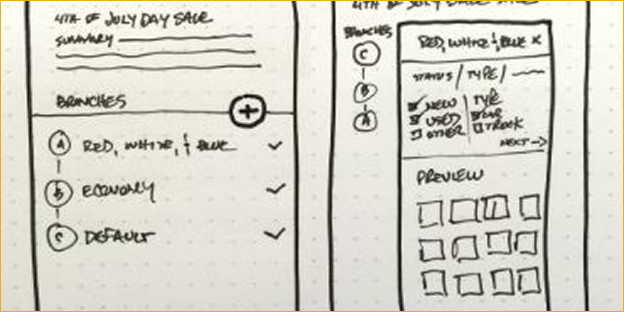
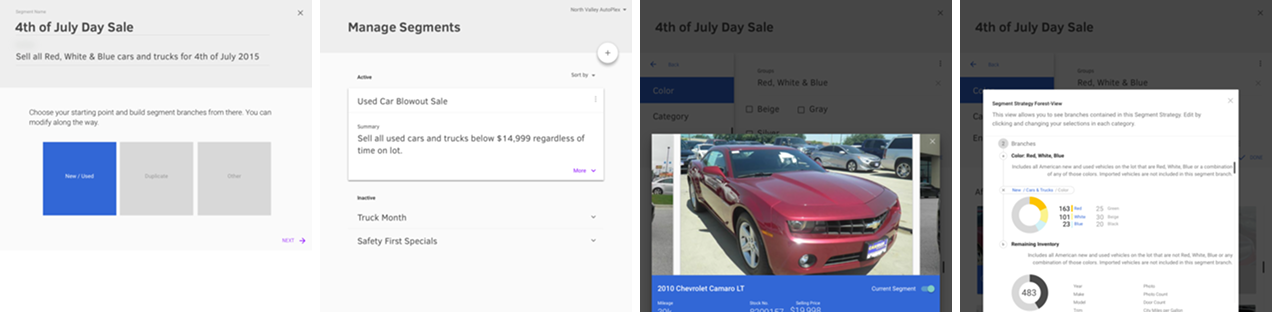
  • Cox Automotive: Early hand sketches mapping how a dealership would build a segment branch by branch — starting with a promotion, then layering color, category, and status filters.
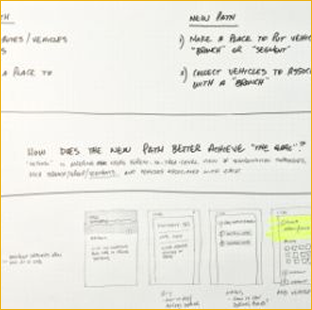
  • Cox Automotive: Comparing the old path against the proposed new path: adding a place to put vehicles and connecting them to a branch or segment, rather than managing rules one-off.
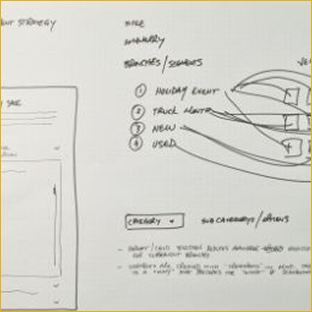
  • Cox Automotive: Working notes on segment creation and reordering — capturing open questions before wireframing.
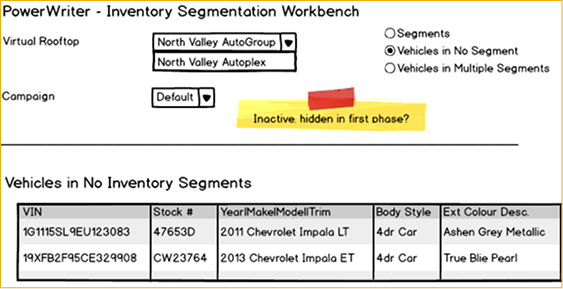
  • Cox Automotive: Detail wireframe of the inventory segmentation workbench, flagging edge cases like inactive segments hidden in phase one.
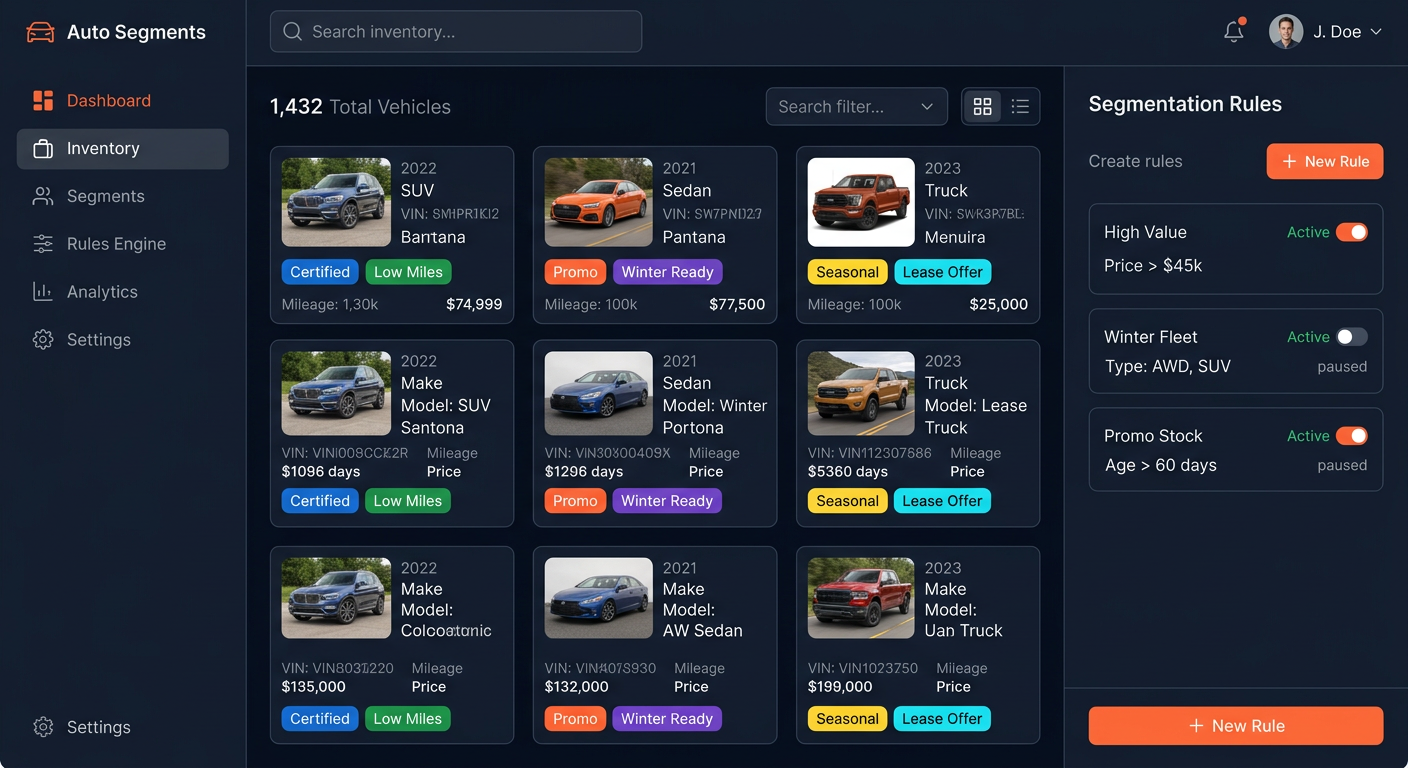
  • Cox Automotive: The shipped flow: choosing a starting point for a segment, managing active and inactive segments, filtering by color and category, and previewing the remaining inventory forecast.

Cox Automotive: Product Design + UX Design

1 / 6

01 · Automotive / SaaS · 2024

Cox Automotive

Product Design + UX Design

An inventory segmentation app that lets dealerships group vehicles by attribute and apply pricing, marketing, and promotional rules automatically.

6 weeks

from brief to a testable prototype

Duration
6 Weeks
Team
Myself + Product Owner

The challenge

Cox Automotive saw a market opportunity and hired me to create an app that let auto dealerships define segments of vehicle inventory based on vehicle attributes, in order to apply rules such as third-party marketing, seasonal pricing, and promotional events. The hard part: define what segmentation even means, then design an app that's intuitively useful with no need for support or documentation.

The process

  1. Defined a segment as a predefined collection of vehicles to which business rules can be applied — the foundational concept the entire app had to make self-evident.
  2. Set core segmentation rules: vehicles cannot belong to more than one segment, all non-segmented vehicles fall back to a default rule, segments can be previewed before finalizing, and vehicles can be moved between segments.
  3. Rapid-prototyped medium-fidelity wireframes in Google Material, iterating quickly on user path and basic interface layout.
  4. Tested a static clickthrough prototype in InVision with select dealership users and gathered direct feedback.

The results

  • Delivered a working, testable prototype in 6 weeks
  • Dealership testers understood segmentation without documentation or support
  • Testing dealership asked, unprompted: "How soon can I use this?"

Facing something like this? Let's scope it together.

Book a call
  • NadineWest: NadineWest: UX Design
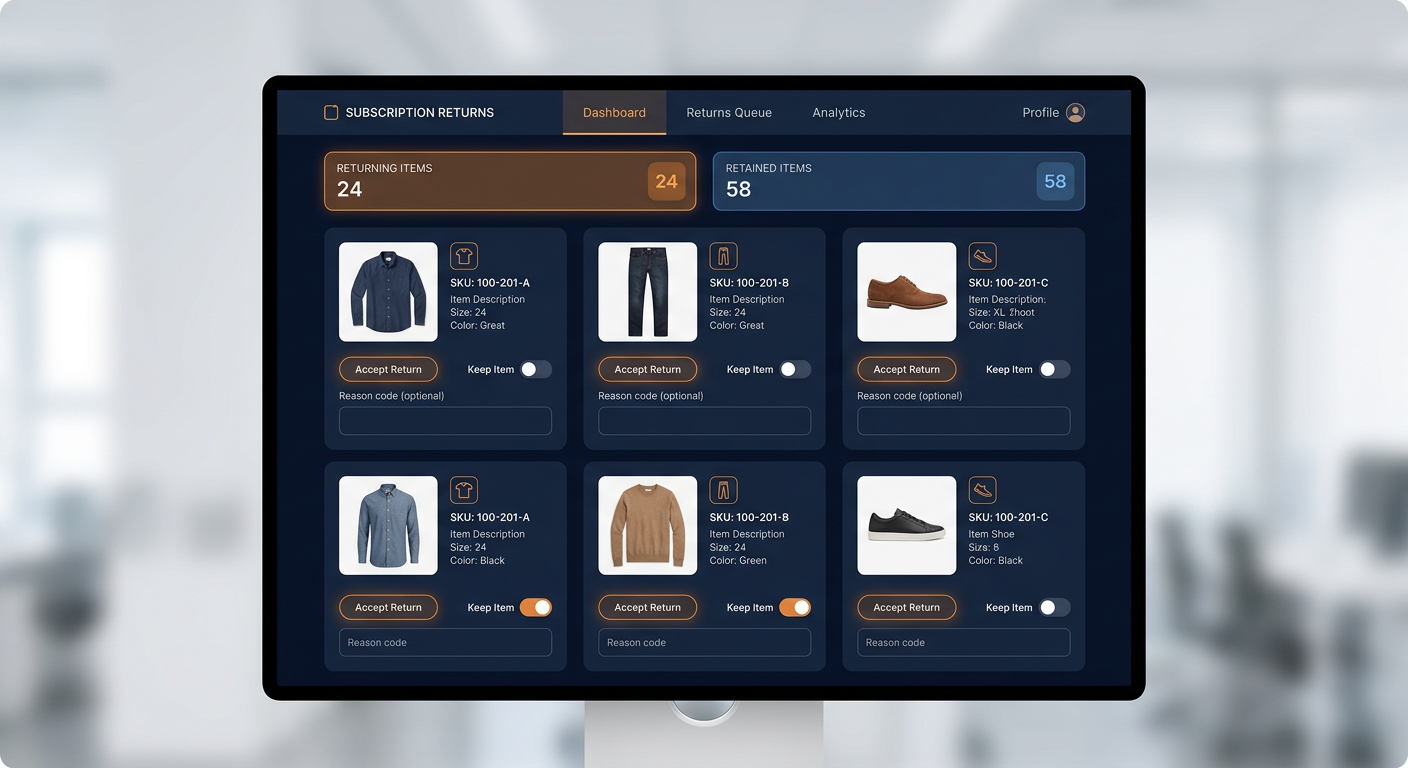
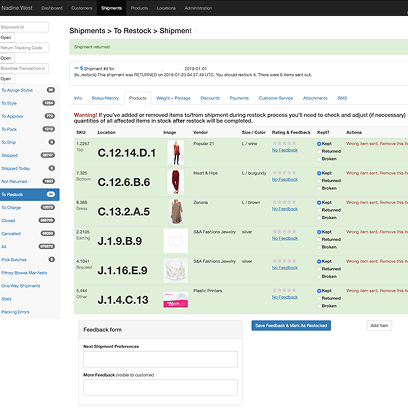
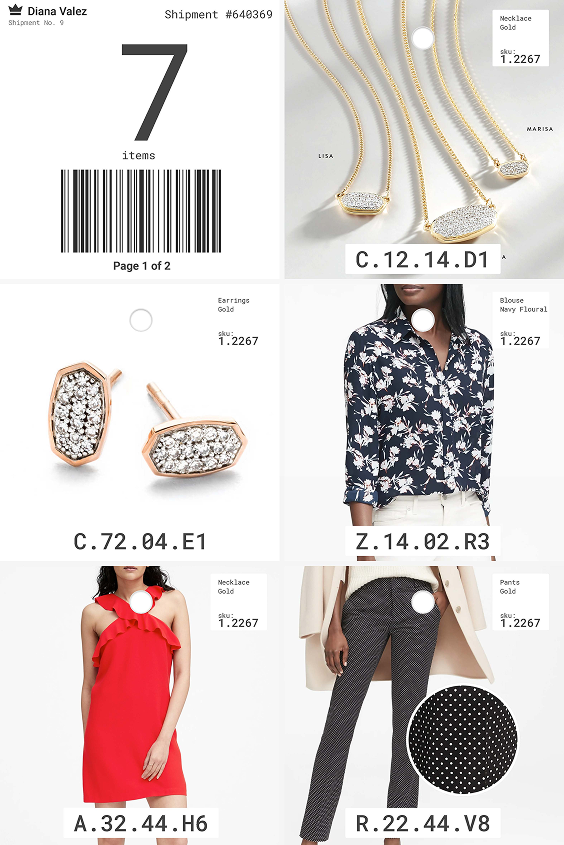
  • NadineWest: Before: the original returns table crammed status, SKU, image, feedback, and restock decisions into dense rows employees had to read line by line under warehouse time pressure.
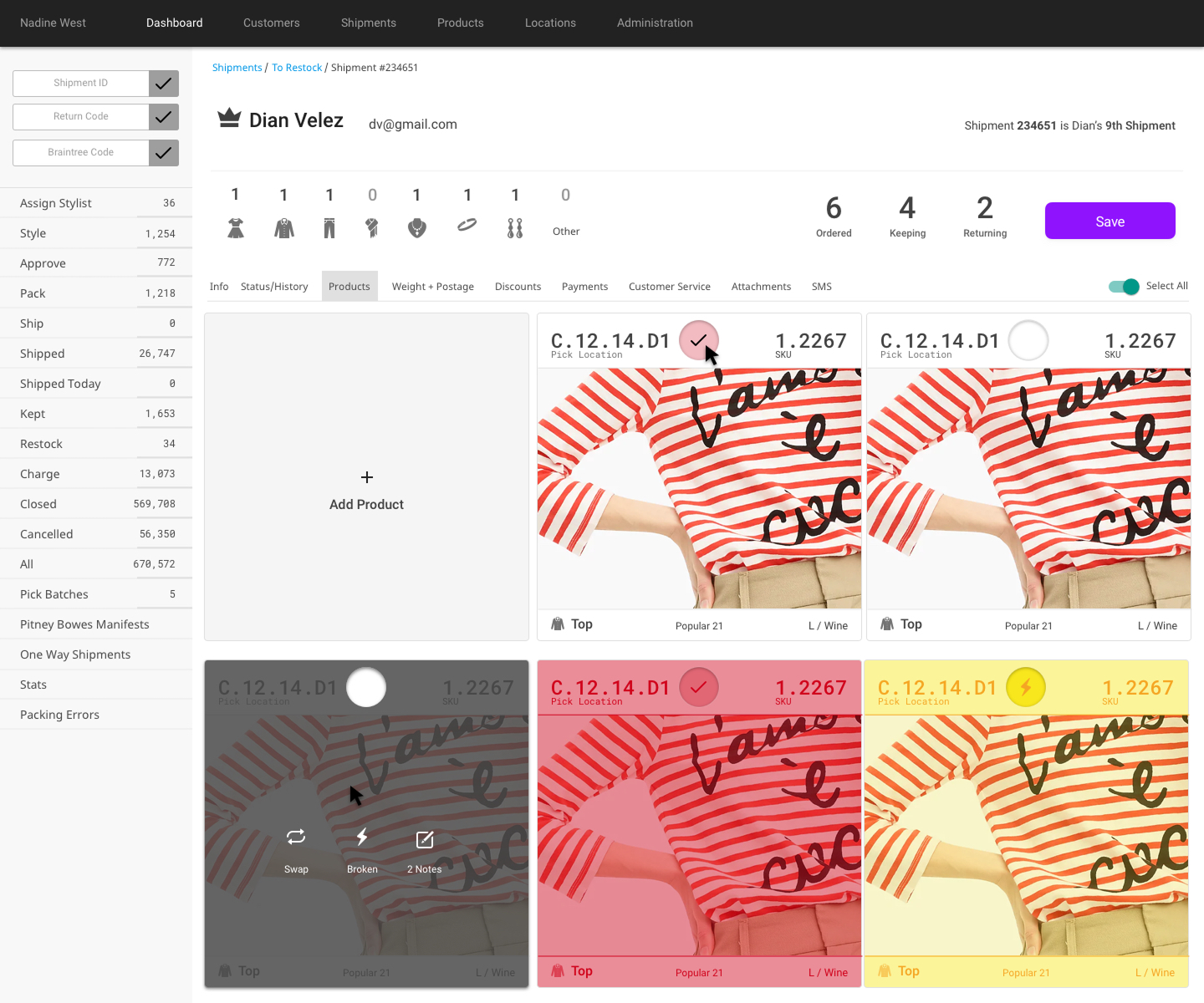
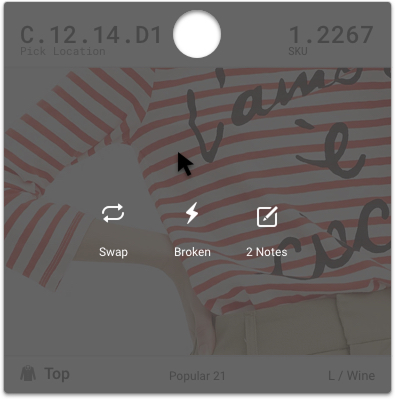
  • NadineWest: After: a card-based layout replaced the table, giving every item a large product photo, pick location, and SKU so it could be recognized at a glance instead of read.
  • NadineWest: Swap, Broken, and Notes actions surfaced directly on hover, keeping the primary comparison task uninterrupted by menus or modals.
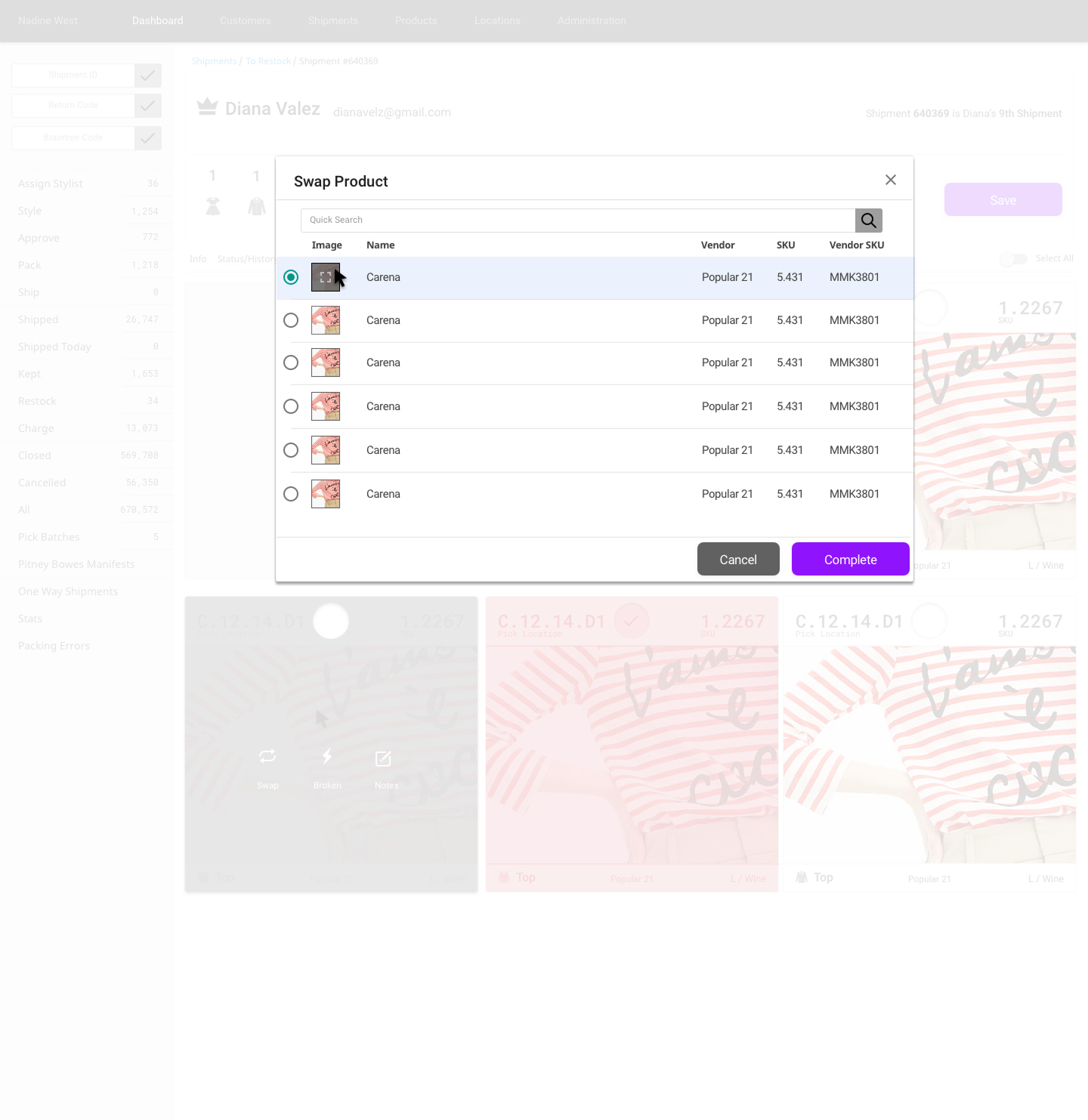
  • NadineWest: The Swap Product flow let employees correct a mis-picked item inline, with a thumbnail-first list to confirm the right SKU at a glance.
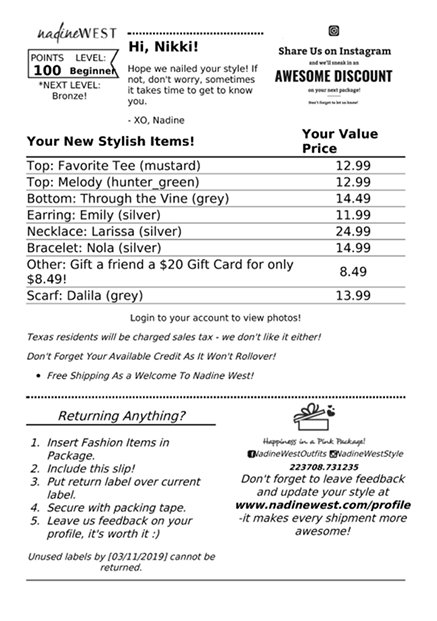
  • NadineWest: Before: the original packing slip buried the new items list under dense copy and small type, with no clear price or return call-to-action.
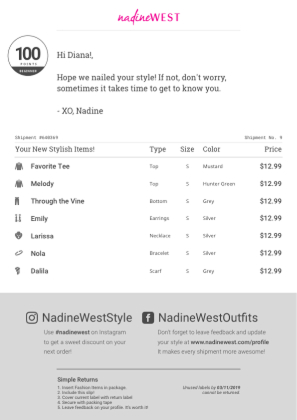
  • NadineWest: After: a redesigned packing slip surfaced item, size, color, and price in a clean scannable table, with returns instructions simplified below.
  • NadineWest: The pick slip was rebuilt around the same card language as the returns screen — one glance to identify a large-format photo, SKU, and pick location per item.

NadineWest: UX Design

1 / 8

02 · Retail / Clothing Subscription · 2023

NadineWest

UX Design

A returns-processing redesign for a clothing subscription retailer, cutting a slow, error-prone workflow down to a fraction of its original time.

10x

faster returns processing

Duration
1 Week
Team
Myself

The challenge

Returns are the money-maker for NadineWest.com, and they were losing money because employees relied on software that was difficult, slow, and error-prone. The interface was too hard to scan quickly, so the core task — comparing returning items against what was retained — kept breaking down under real warehouse pressure.

The process

  1. Identified the core user task as comparison, and designed everything around making that comparison instant.
  2. Displayed products in a card layout with large images, product category, warehouse pick location, and SKU so items could be recognized at a glance rather than read.
  3. Used product category icons for rapid visual anchoring across long lists of returns.
  4. Surfaced a running summary of total products in the order, returning products, and products retained, with returned-item counts broken out by category.

The results

  • 10x faster returns processing
  • Sharp drop in processing errors from the redesigned comparison workflow
  • Delivered in 1 week

Facing something like this? Let's scope it together.

Book a call
  • Dovetail: Dovetail: UX Design

Dovetail: UX Design

03 · HR Software · 2023

Dovetail

UX Design

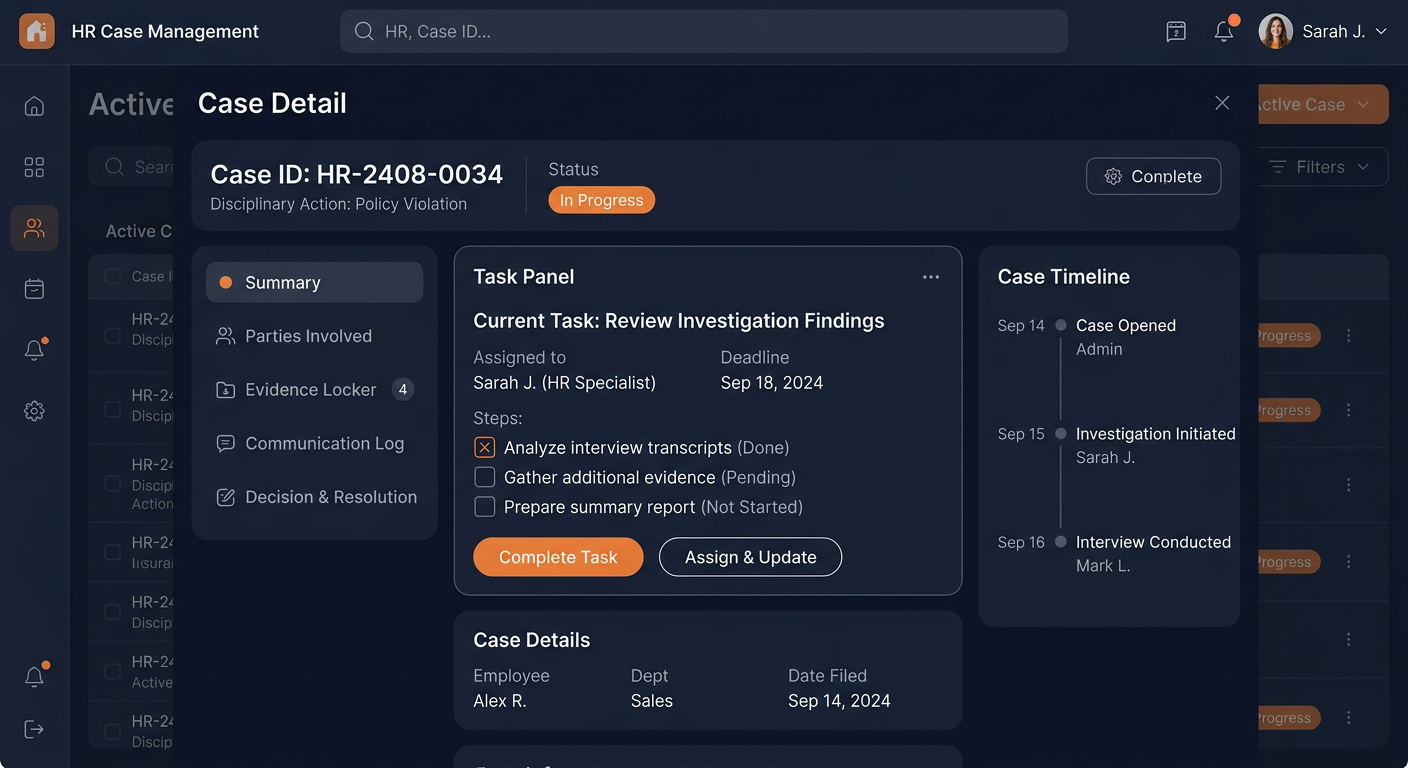
A redesign of Dovetail Software's HR case management product — code-named "Blue" — turning a convoluted, crowded interface into a clear, task-first system.

4 weeks

to a clear, task-first redesign

Duration
4 weeks
Team
Myself + Product Dev Team

The challenge

Dovetail's flagship product made everyday user tasks slow and cumbersome due to a convoluted, crowded interface. Every screen tried to show everything at once, and users had to hunt for the one action they actually needed to complete.

The process

  1. Surfaced the primary user task per screen, and submerged secondary and tertiary functionality behind clear hierarchy.
  2. Reduced overall "UI awareness" so attention stayed on the task, not the interface itself.
  3. Defined primary, secondary, and tertiary tasks explicitly, then built repeatable UI layout patterns from that hierarchy across pick slips, packing slips, case screens, and the dashboard.

The results

  • Clear, quick task completion across every redesigned screen
  • Established reusable layout patterns adopted across the product
  • Delivered in 4 weeks alongside the product development team

Facing something like this? Let's scope it together.

Book a call
  • Dell ProDeploy: Dell ProDeploy: UX Design + Systems Design
Visuals under NDA

Dell ProDeploy: UX Design + Systems Design

04 · Enterprise IT · 2022

Dell ProDeploy

UX Design + Systems Design

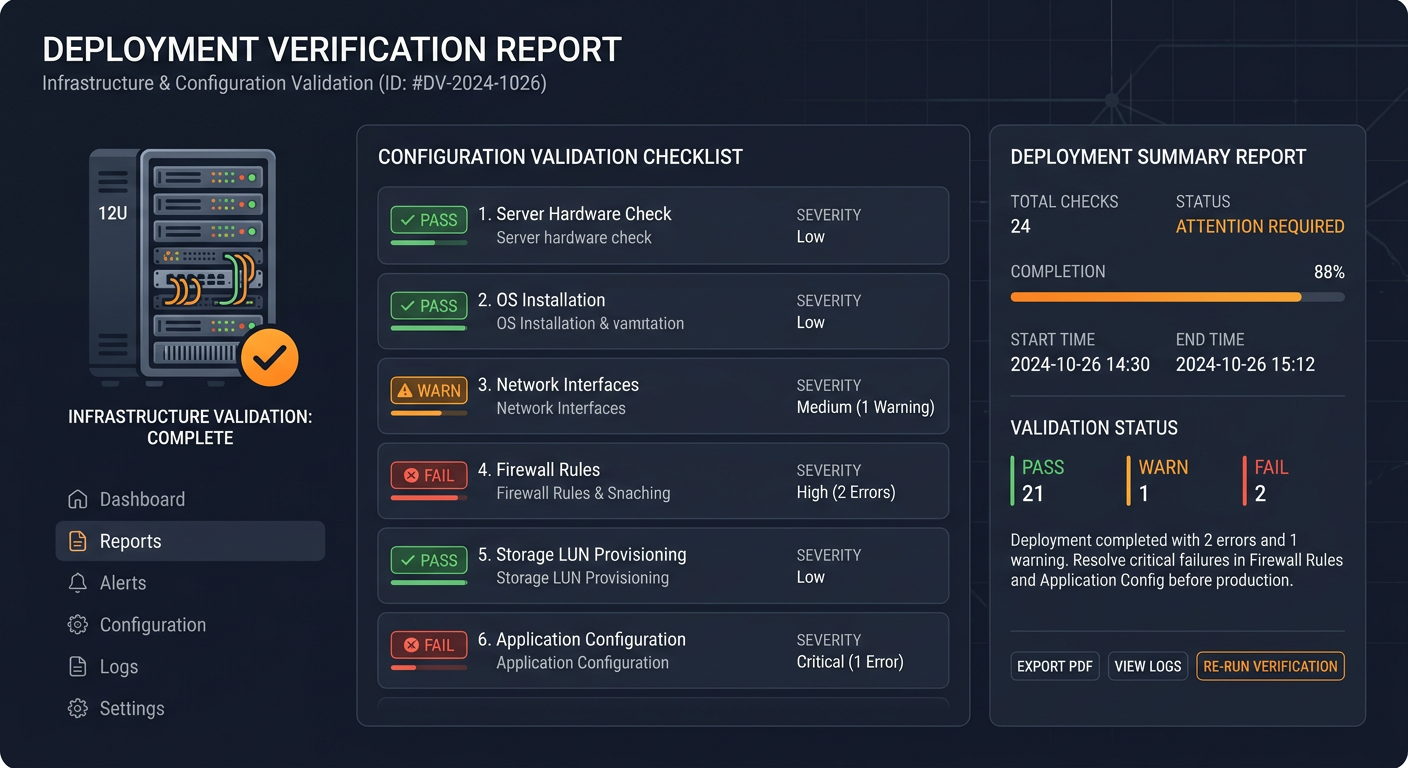
A verification tool that reduced Dell's server, storage, and network deployment checks from three weeks to under sixty seconds.

3 weeks to 60 sec

deployment verification time

Duration
1 Month
Team
Myself + 2 Engineering SMEs

The challenge

Deployment verification of Dell's servers, storage, and network solutions was lengthy, costly, and error-prone. The team needed to validate roughly 80,000 configuration attributes remotely to confirm a deployment matched its sales order specifications — a process that previously took weeks of manual checking.

The process

  1. Worked directly with two engineering subject matter experts to map the full set of ~80,000 configuration attributes that needed validation.
  2. Designed a solution that checked those attributes remotely and produced a PDF report flagging mismatches, errors, and severity codes.
  3. Prioritized the report's structure so the deployment verification team could coarse-correct issues quickly instead of re-auditing from scratch.

The results

  • Reduced deployment verification time from 3 weeks to under 60 seconds
  • Saved Dell millions in annual revenue loss from delayed and error-prone deployments
  • Delivered in 1 month working with 2 engineering SMEs

Facing something like this? Let's scope it together.

Book a call

Have a project like these?

Book a call and tell me what's on your plate. I'll reply within one business day with a scoped plan.

Book a call to request a project

How I plug in

  1. 01

    Brief

    Send the deck, the deadline, and the client context. I scope hours or sprints against your timeline — not mine.

  2. 02

    Embed

    I plug into your tools, file structure, and revision process within a day. No onboarding drag, no ramp-up billed to you.

  3. 03

    Deliver

    Production or creative direction, moving at your pace, checking in on your cadence — Slack, standups, whatever you run.

  4. 04

    Hand back

    Clean handoff in your file format, organized the way your team expects. I disappear the moment the client sees it.

Capacity, not packages

Priced the way agencies think — hours, sprints, and reserved bench time. Scope changes, the rate doesn't.

Mini Sprint

$2,499

flat rate · 10 hours, one week

  • A low-risk way to test the fit
  • One-off production or creative direction
  • Delivered in your file format
  • No minimum commitment after
Reserve capacity
Most popular

Sprint Block

$4,799

per block · 40 hours

  • Reserved capacity for crunch weeks
  • Production + creative direction, mixed as needed
  • Priority turnaround on requests
  • White-label, invisible to your client
Reserve capacity

Embedded Retainer

$8,499

per month · 80 hours reserved

  • Standing bench capacity, month over month
  • Priority slot before other engagements
  • Same team on every project for continuity
  • Scale hours up or down as pipeline shifts
Start retainer

Not sure what fits? Tell me the scope and I'll recommend a block.

Questions agencies ask

Always. I work under your agency's name, never contact your client directly, and never list the work in my own portfolio without sign-off. Your client never knows I exist.

Tell me what's on your plate

Deadline, deliverables, and how much bandwidth you're short. I'll reply within one business day with a scoped plan.

A quick questionnaire, about 5 to 7 minutes. It helps me see whether we are the right fit and how I can support your next stage of growth.

01Your business and what you offer

How are you currently selling?

02Brand clarity and current strategy

03Scope of support you are exploring

What do you need?

04Budget and working style